PRACTICE & APPROACH
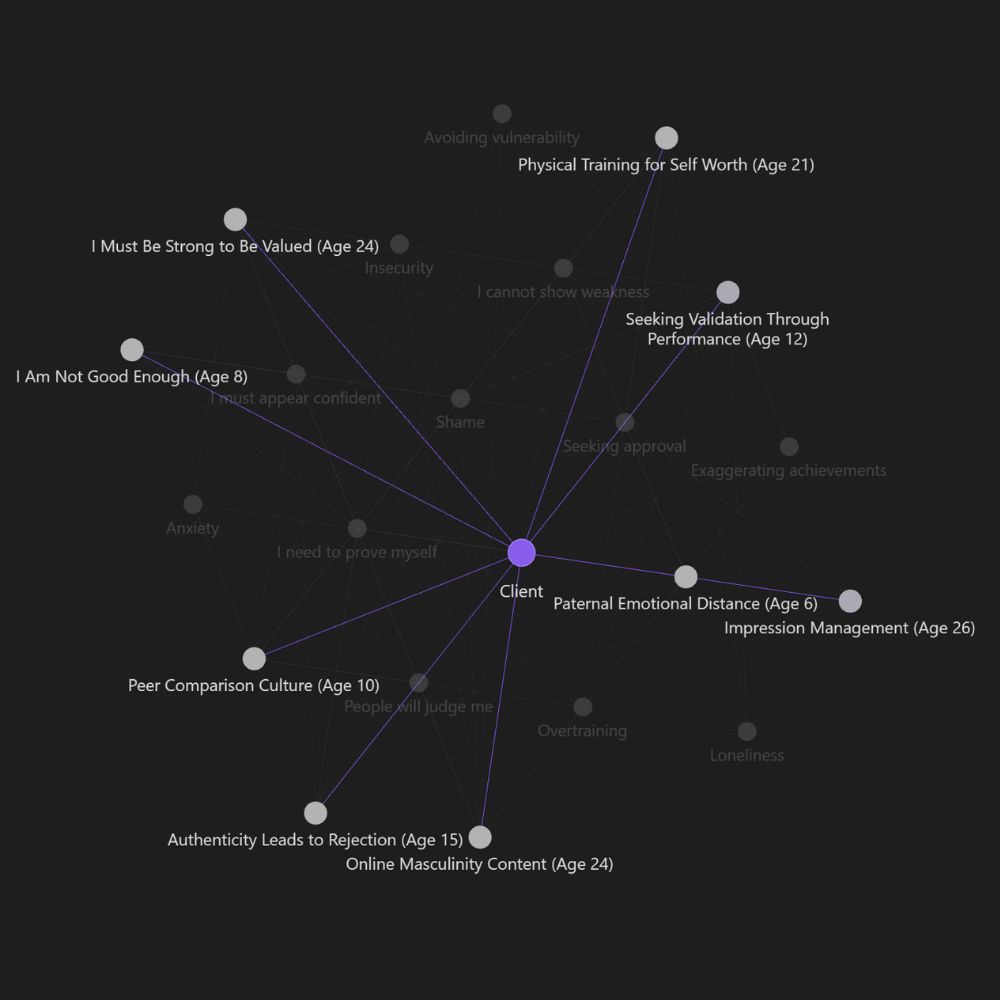
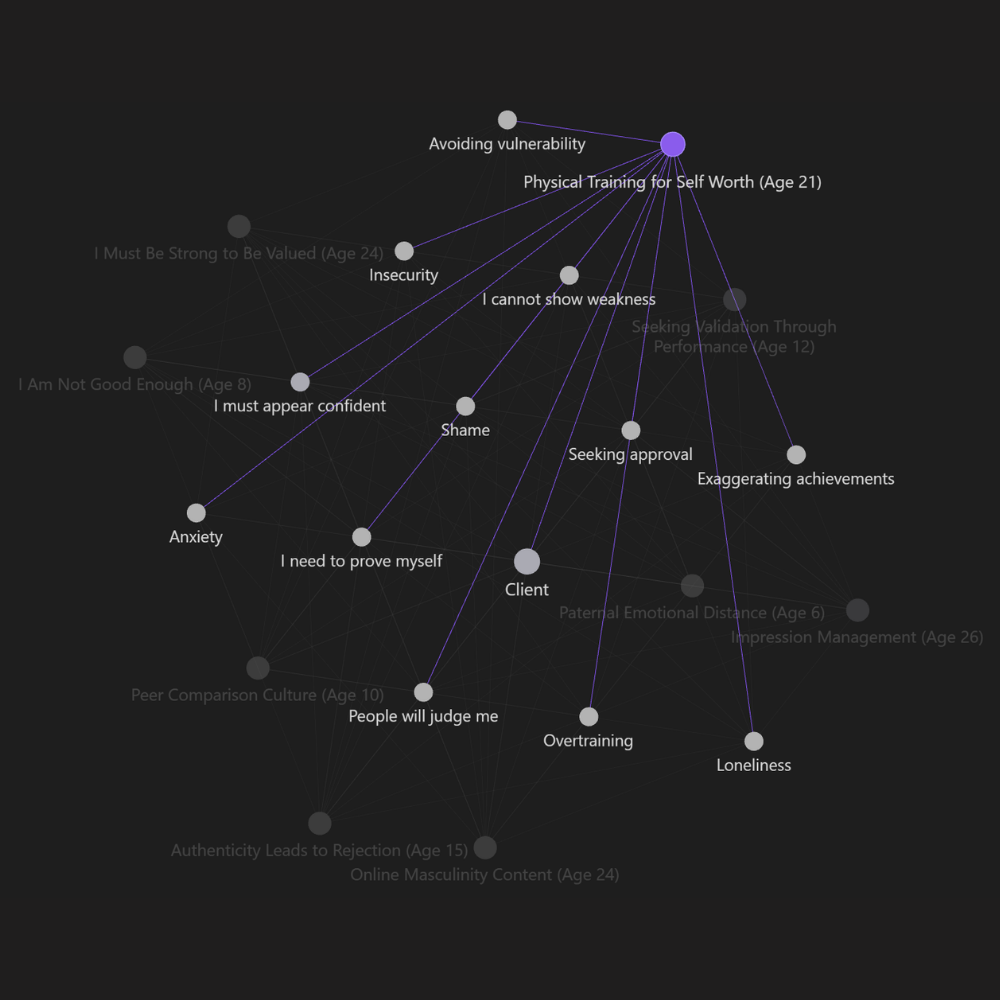
In remote settings, I leverage documentation, visual mapping, and structured illustration of psychological mechanisms. Making patterns explicit and visually understandable helps clients understand their internal processes and engage more actively in change.
THERAPY FOR MEN
When working with men, I take into account specific patterns that often emerge in therapy. These include difficulty verbalizing emotions, a tendency to approach emotions as problems to solve rather than experiences to process, and resistance to couples therapy dynamics where men may feel disadvantaged. My approach creates a balanced, structured therapeutic space where emotional exploration is framed in a way that is both practical and psychologically rigorous.
I have particular experience working with body dysmorphic concerns, including muscle dysmorphia, as well as substance use disorders and compulsive sexual behaviors. These areas are approached through evidence-informed frameworks, focusing on behavioral patterns, cognitive distortions, emotional regulation, and underlying identity or self-worth dynamics.
While I recognize the positive impact of physical training on mental health, I emphasize that exercise complements but does not replace structured psychotherapeutic work.
In remote settings, I leverage documentation, visual mapping, and structured illustration of psychological mechanisms. Making patterns explicit and visually understandable helps clients understand their internal processes and engage more actively in change.