
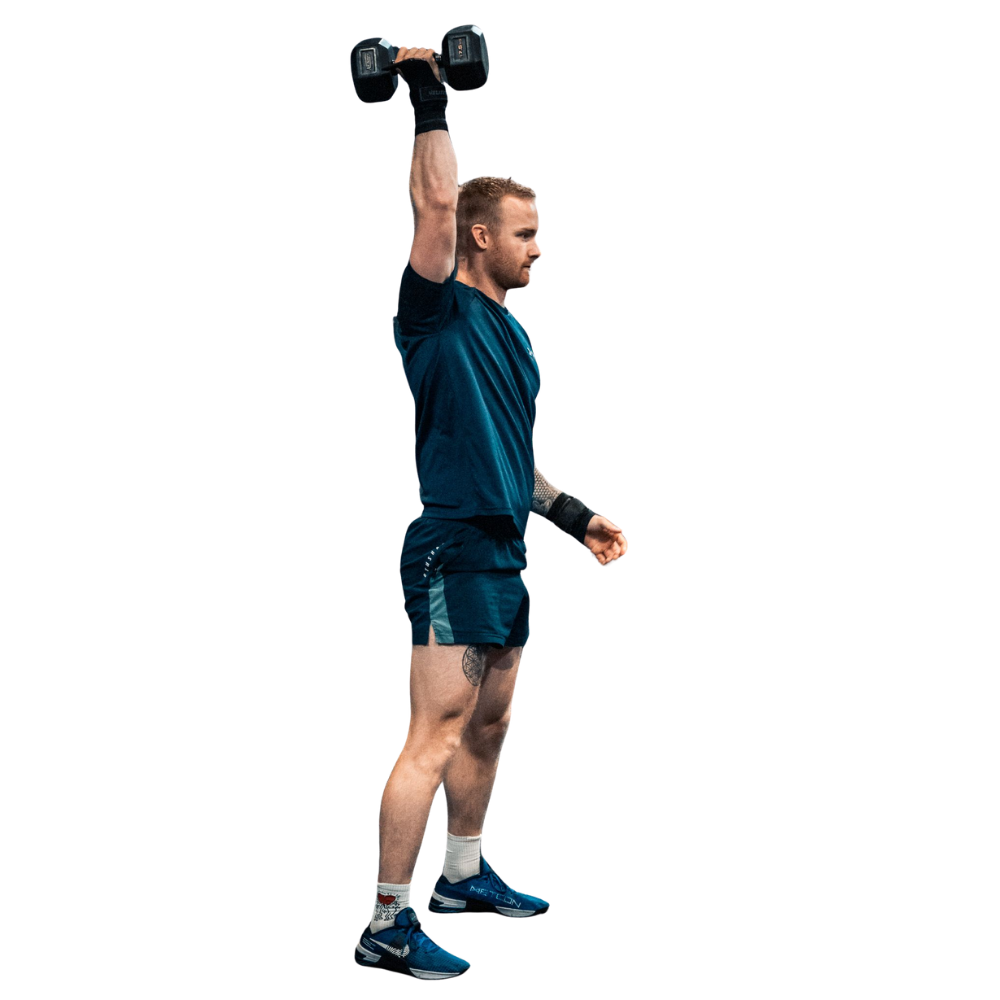
Dumbbell Snatch
DEMONSTRATED BY:
Dumbbell Snatch
Muscles & Biomechanics
Primary
Gluteus Maximus, Hamstrings, Deltoids
Secondary
Quadriceps, Trapezius, Lats, Core
Joint actions
Triple extension (hip/knee/ankle), shoulder flexion & overhead stability
Equipment & Setup
- Single dumbbell (or kettlebell)
- Start with the dumbbell between the feet
- Feet ~ hip to shoulder-width, weight mid-foot
- Hinge at hips, neutral spine, shoulders over the weight
Execution
- Set your brace and keep the dumbbell close
- Drive through the floor to stand explosively (hips extend fast)
- Guide the dumbbell upward (don’t “curl” it)
- Punch the hand to the ceiling and lock out overhead
- Stand tall, then return the dumbbell back between the feet with control
Tempo
Explosive up, controlled return
Breathing
Inhale & brace before the pull, exhale after lockout or at the top
Coaching Cues
- Hips first, arm second
- Keep it close to the body
- Fast hips, quiet shoulder
- Punch up, ribs down
Common Errors
- Pulling with the arm too early
- Letting the dumbbell swing away from the body
- Rounding the back in the setup
- Unstable overhead lockout (ribs flared / soft elbow)
Programming Guidelines
Power / Conditioning
3–6 reps/side · 3–6 sets · Rest 60–120 sec
Strength-Endurance
6–10 reps/side · 3–5 sets · Rest 45–90 sec
Coaching Notes
Prioritize a clean hinge and explosive hip drive. The dumbbell should travel close to the body and finish in a stable, stacked overhead position (wrist over elbow over shoulder over hip). Reduce load if overhead control or spinal position breaks.
